
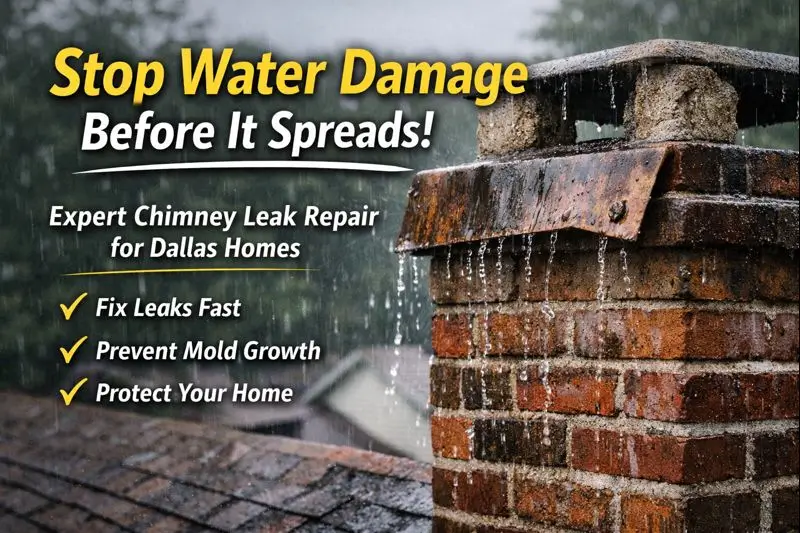
Water damage never announces itself. It enters quietly, spreads patiently, and leaves homeowners dealing with repairs they never planned. When it comes to chimneys, leaks are one of the most overlooked threats to home safety, yet they cause some of the most expensive damage. Chimney leak repair is not about reacting to visible stains or crumbling brick. It is about stopping water before it changes the structure of your home. Regular fireplace cleaning Dallas homeowners schedule plays a key role in this process because cleaning exposes early moisture signs before damage spreads.
In North Texas, chimneys face heavy rain, intense heat, sudden temperature shifts, and seasonal storms. These conditions push moisture into weak points year after year. During routine fireplace cleaning, hidden staining, rust, and liner wear become visible. Once water finds an opening, it does not stop on its own. It keeps moving until something fails. That is why chimney leak repair should be approached as prevention, not patchwork.
Why Chimney Leaks Are More Dangerous Than Most Homeowners Think
As you know, water always follows gravity and pressure. When a chimney leaks, moisture moves downward into places you cannot see. The damage does not stay on the surface. It travels through mortar joints, liners, and framing. This is where chimney liner installation in Dallas becomes especially important, because a properly installed liner acts as a protective barrier that limits moisture penetration and directs condensation safely out of the system.
Many homeowners assume chimney leaks only affect brick or stone. However, water also damages metal components, insulation, drywall, and wood framing. A compromised or outdated liner allows moisture to sit inside the chimney, accelerating corrosion and internal decay. By the time stains appear inside the home, the leak has usually been active for months.
Chimney leak repair stops this chain reaction early. When paired with proper chimney liner installation in Dallas, it protects airflow, structure, and fire safety at the same time. Ignoring leaks allows damage to grow quietly until repairs become disruptive.
What Causes Chimney Leaks in Dallas Area Homes
Chimney leaks rarely come from a single source. Most leaks develop through multiple weak points working together. Understanding these entry points helps homeowners spot problems sooner.
Common sources of chimney leaks include:
- Cracked or deteriorated chimney crowns
- Damaged flashing where the chimney meets the roof
- Missing or improperly sized chimney caps
- Absorbing masonry that holds moisture
- Worn liners that allow condensation buildup
Dallas weather accelerates all of these issues. Heat expands materials. Rain saturates them. Cold snaps cause contraction. Over time, those cycles open pathways for water.
How Water Damage Spreads Once a Chimney Starts Leaking
However, the real danger begins after water enters the chimney system. Moisture does not stay contained. It spreads like ink through paper.
Water seeps into mortar joints and weakens bonding materials. Metal components rust and lose strength. Liners crack or shift. Damp materials trap heat differently, affecting airflow and draft. Homeowners searching for chimney leak repair near me often realize too late that delays worsen damage. Understanding the potential chimney leak repair cost helps plan timely action and prevents minor leaks from becoming expensive repairs.
Left untreated, chimney leaks can lead to:
- Smoke backing into living spaces
- Mold growth in surrounding walls
- Fireplace inefficiency
- Structural instability
Chimney leak repair interrupts this progression. Early action saves materials that would otherwise require replacement.
Warning Signs That Point to a Chimney Leak
Most homeowners notice leaks only after damage becomes visible. Learning early signs helps stop water damage before it spreads further. Scheduling a professional leaking chimney repair ensures small issues are addressed before they worsen. Knowing how to repair a leaking chimney properly can save time, protect your home’s structure, and prevent costly future problems.
Watch for these indicators:
- White staining on exterior masonry
- Rust on dampers or firebox components
- Musty odors near the fireplace
- Peeling paint or bubbling drywall near the chimney
- Dripping sounds after heavy rain
Each sign points to moisture intrusion. None should be ignored. A professional inspection confirms the source and determines the proper chimney leak repair approach.
Step by Step Chimney Leak Repair Process
Chimney leak repair works best when approached methodically. Skipping steps leads to short term fixes that fail quickly.
Step 1: Identify the Source of Moisture
Inspection focuses on the crown, flashing, cap, masonry, and liner. Repair begins only after the true entry point is found.
Step 2: Address Structural Vulnerabilities
Cracked crowns and deteriorated mortar joints are repaired or rebuilt to restore water resistance.
Step 3: Repair or Replace Flashing
Flashing failures allow roof water to pour directly into the chimney structure. Proper sealing restores the barrier.
Step 4: Install or Upgrade the Chimney Cap
A properly sized cap prevents direct rainfall, debris entry, and animal intrusion.
Step 5: Seal Masonry Surfaces
Professional breathable sealants repel water while allowing moisture to escape naturally.
This process protects both the chimney and the home. It also prevents repeat leaks.
Why Chimney Liner Installation Matters for Leak Prevention in Dallas
Chimney liner installation in Dallas homes plays a critical role in moisture control. Liners guide smoke safely out while protecting the chimney walls from heat and condensation.
When liners crack or deteriorate, moisture becomes trapped inside the chimney system. That trapped moisture accelerates masonry damage and metal corrosion.
A properly installed liner:
- Improves airflow consistency
- Reduces condensation buildup
- Protects internal chimney structure
- Supports long term leak prevention
Chimney leak repair often reveals liner issues that homeowners never knew existed. Addressing both together creates lasting protection.
Why Professional Chimney Leak Repair Works Better Than DIY Fixes
Many homeowners attempt temporary fixes using surface sealants or patch materials. These approaches rarely solve the problem.
DIY repairs often fail because:
- The true source of the leak is misidentified
- Materials trap moisture instead of releasing it
- Roof access creates safety risks
- Internal damage remains untouched
Professional chimney leak repair addresses structure, airflow, and moisture movement together. That holistic approach stops water damage instead of masking it. Local experience matters when addressing chimney leaks. Ak chimney services understands how Texas weather stresses chimney systems differently than other regions. Each home receives an inspection tailored to its construction, exposure, and usage patterns.
Repairs focus on long term performance, not surface appearance. This approach helps Dallas homeowners avoid repeated leaks, seasonal damage, and escalating repairs.
Stopping Chimney Water Damage Chimney
leaks do not fix themselves. They spread quietly until damage forces attention. Chimney leak repair stops water at its source, protects airflow, and preserves home structure.
When repairs are done correctly, homeowners regain control. Visit us to learn how we work. They protect their investment and their safety. If you want help identifying or repairing a chimney leak, talk with Ak chimney services today at 469 218 3590.
Related Post:
Why Hiring a Chimney Sweep in Dallas Keeps Your Home Safe?
FAQ’s
Common signs include white staining on the chimney exterior, rust inside the firebox, musty odors, and water marks near the fireplace. However, many leaks stay hidden, which is why professional inspections are important.
Yes. Chimney leaks can damage drywall, insulation, framing, and ceilings over time. Moisture often travels far beyond the chimney before visible signs appear, leading to costly interior repairs.
Regular chimney and fireplace cleaning helps reveal early moisture damage, liner issues, and masonry deterioration. Catching these problems early makes chimney leak repair more effective and prevents water from spreading further.