
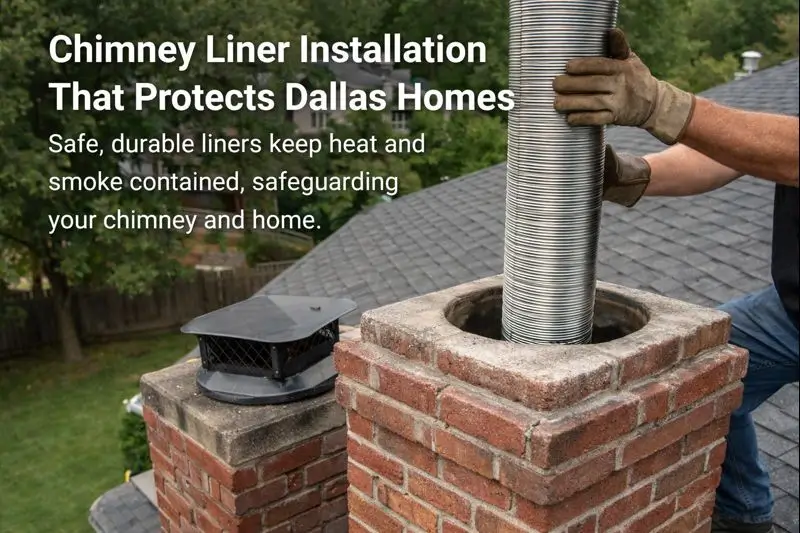
Chimney liner installation is the safety in fireplace depends on what happens inside the chimney, not just what you see in the living room. A chimney liner controls heat, directs smoke, and protects the structure surrounding your chimney. When a liner is missing, damaged, or improperly installed, heat and combustion gases can escape into areas never designed to handle them. Chimney liner installation is a foundational step in protecting both your home and the people living inside it.
Many Dallas homeowners assume liners only matter when smoke backs up or visible damage appears. However, liner failure usually starts quietly. By the time symptoms appear, the system has already been compromised. This article explains how chimney liner installation works, why it matters for Dallas homes, and how proper installation supports long term chimney safety and performance.
What a Chimney Liner Does Inside the Chimney System
A chimney liner forms a continuous, protective pathway inside the flue. Its role is to safely guide smoke, gases, and heat from the fireplace or appliance out of the home. Without a liner, these byproducts come into direct contact with brick and mortar. Over time, heat dries masonry, gases corrode surfaces, and moisture settles into porous materials. Small gaps form, airflow becomes unstable, and the surrounding structure absorbs heat it was never meant to handle.
A properly installed chimney liner helps:
- Maintain consistent draft and airflow
- Protect masonry from heat and corrosive gases
- Reduce fire risk caused by heat transfer
- Support efficient fireplace and appliance operation
As you know, fireplaces function as open systems. Everything that burns inside the firebox affects the chimney above it. The liner acts as the system’s internal shield.
Signs You May Need Chimney Liner Installation
Chimney liners rarely fail all at once. They degrade slowly, often without obvious warning. Recognizing early signs allows homeowners to act before damage spreads beyond the flue.
Common indicators include:
- Cracked or missing flue tiles discovered during inspection
- Smoke entering the home instead of drafting upward
- Persistent odors when the fireplace is not in use
- Heavy creosote buildup despite regular cleaning
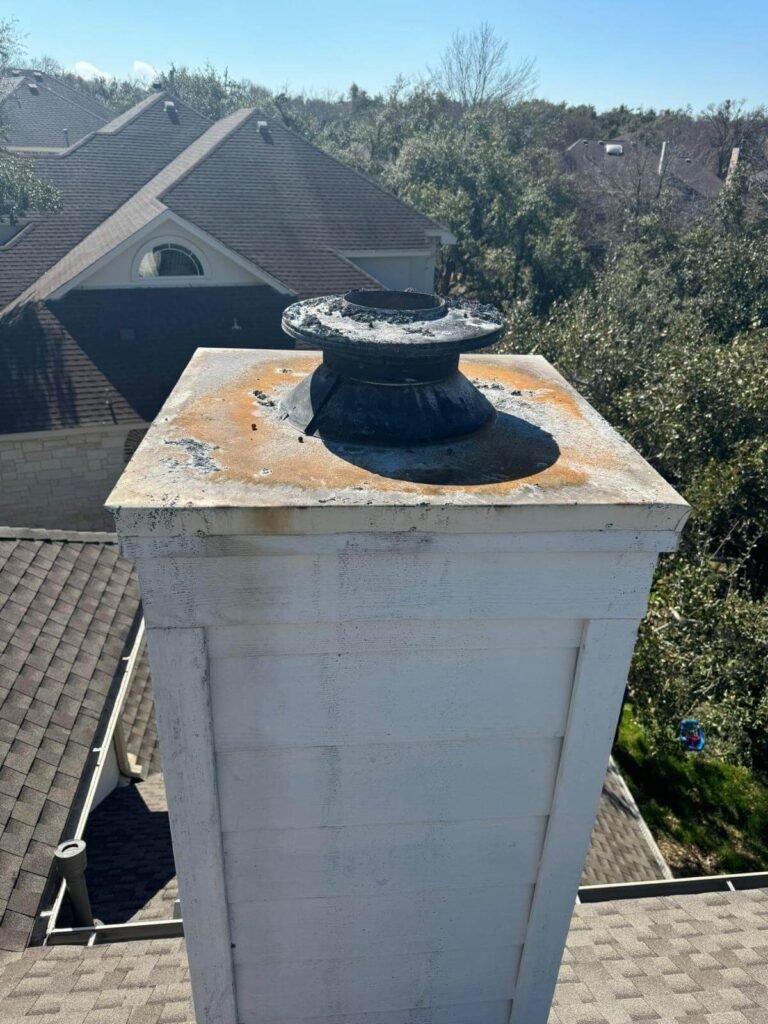
- Visible deterioration along the chimney exterior
Types of Chimney Liners Used in Modern Installation
Chimney liner installation depends on the fuel type, appliance design, and chimney structure. Selecting the correct liner is essential for system performance.
Clay Tile Liners: Common in older construction, clay liners tolerate high heat but crack easily during rapid temperature changes. Repair options are limited once damage occurs.
Stainless Steel Liners: Stainless steel liners adapt to many configurations. They resist corrosion and work well for wood, gas, and oil systems when correctly sized and insulated.
Cast In Place Liners: This method forms a solid liner inside the flue. It seals gaps and reinforces weakened masonry, making it suitable for severely deteriorated chimneys. Each liner type serves a specific purpose. Choosing incorrectly can create airflow problems and safety concerns.
How Chimney Liner Installation Works Step by Step
Many homeowners imagine chimney liner installation as a simple drop in process. In reality, proper installation follows a precise sequence designed to protect the entire system.
Inspection and Preparation: Technicians begin with a detailed inspection to assess flue size, offsets, damage, and appliance connections. Any debris or buildup is removed before installation begins.
Measuring and Sizing: The liner must match the appliance output and chimney dimensions. Improper sizing leads to poor draft and inefficient combustion.
Installation and Stabilization: The liner is carefully installed from the top or bottom depending on the system design. Insulation may be added to stabilize temperatures and improve performance.
Connection and Termination: The liner is securely connected to the appliance or firebox. A proper chimney cap and termination system prevent water and debris from entering.
Why Chimney Liner Installation Matters for Dallas Homes
Dallas homes face conditions that accelerate chimney wear. Temperature swings stress masonry. Seasonal storms introduce moisture. Wind driven debris enters open flues.
Many homes across Dallas and surrounding cities were built before modern liner standards existed. Some chimneys were never lined at all. This makes inspections essential, as discussed in Why Every Dallas Home Needs a Chimney Inspection.
Chimney liner installation helps Dallas homeowners:
- Improve indoor air quality
- Reduce moisture related deterioration
- Support consistent fireplace performance
- Protect framing and attic spaces from heat transfer
A liner transforms an exposed passageway into a controlled exhaust system.
Common Mistakes Homeowners Make With Chimney Liners
Most chimney liner problems result from incorrect decisions rather than material failure.
Skipping Inspections: Assuming a liner is fine without inspection delays detection of cracks or separation.
Improper Installation: Installing a liner without proper insulation or sizing leads to draft instability.
Mixing Appliance Types: Different appliances require specific liner materials and diameters.
Ignoring Moisture Entry: Water intrusion from damaged caps or flashing accelerates liner deterioration.
Avoiding these issues starts with professional evaluation and clear guidance.
When Professional Installation Becomes Essential
Many homeowners search for install chimney liner information online. Education helps, but installation involves confined spaces, roof access, and safety risks.
Professional chimney liner installation ensures:
- Compliance with local codes
- Proper appliance compatibility
- Secure sealing and termination
- Documentation for inspections or insurance
How Chimney Liner Installation Supports Ongoing Maintenance
A new liner does not replace maintenance. Instead, it makes maintenance more effective.
With a properly installed liner:
- Chimney sweeping removes buildup more efficiently
- Creosote accumulation slows
- Inspections reveal changes earlier
- Moisture damage becomes less likely
This directly supports the principles outlined in Why Chimney Cleaning in Dallas TX Is Essential.
Choosing the Right Chimney Professional in Dallas
Experience matters when working inside chimney systems. Local knowledge helps identify regional construction styles and common failure patterns. AK Chimney Services approaches chimney liner installation with education and precision. Certified technicians explain system conditions clearly and help homeowners make informed decisions. Serving Dallas and surrounding cities, the team focuses on safety, performance, and long term reliability rather than short term fixes.
Decide now for chimney Inspections
Chimney liner installation protects the most vulnerable part of your fireplace system. It controls heat, directs smoke, and shields your home from hidden damage. For Dallas homeowners, proper liner installation supports safety, efficiency, and peace of mind.
Professional installation ensures the liner functions as part of the entire chimney system, not as an isolated component. If you are considering chimney liner installation, expert evaluation helps protect your home before problems surface.
Schedule an inspection with AK Chimney Services by calling +1 (508) 395-2624 and speak with certified technicians who understand Dallas chimneys and how to protect them properly. You can also visit us to explore more our services.
Related Post
Fireplace Cleaning Dallas Homeowners
FAQ’s
Signs include cracked flue tiles, smoke entering the home, strong odors when the fireplace is not in use, or inspection findings that show liner deterioration. A professional inspection is the most reliable way to confirm liner condition.
Not every fireplace requires a new liner, but many older chimneys lack liners that meet current safety standards. New appliances and inserts often require compatible liners to operate safely and efficiently.
Yes. A damaged or missing liner allows heat, moisture, and gases to reach masonry and surrounding structures, increasing the risk of structural damage and performance issues throughout the chimney system.